New Product Alert! The Canine Enrichment Vault is out now! Buy it here! Dismiss

  • Skip to main content
  • Skip to primary sidebar
  • Skip to footer

R+R Canine Consulting

Certified Family Dog Mediator and Professional Dog Trainer

  • Home
  • About
  • Work with Me
  • Blog
  • Shop
  • Contact

Obedience vs. Enrichment: Why Your Dog Needs More Than Commands

October 20, 2025 by Jennyfer Tan Leave a Comment

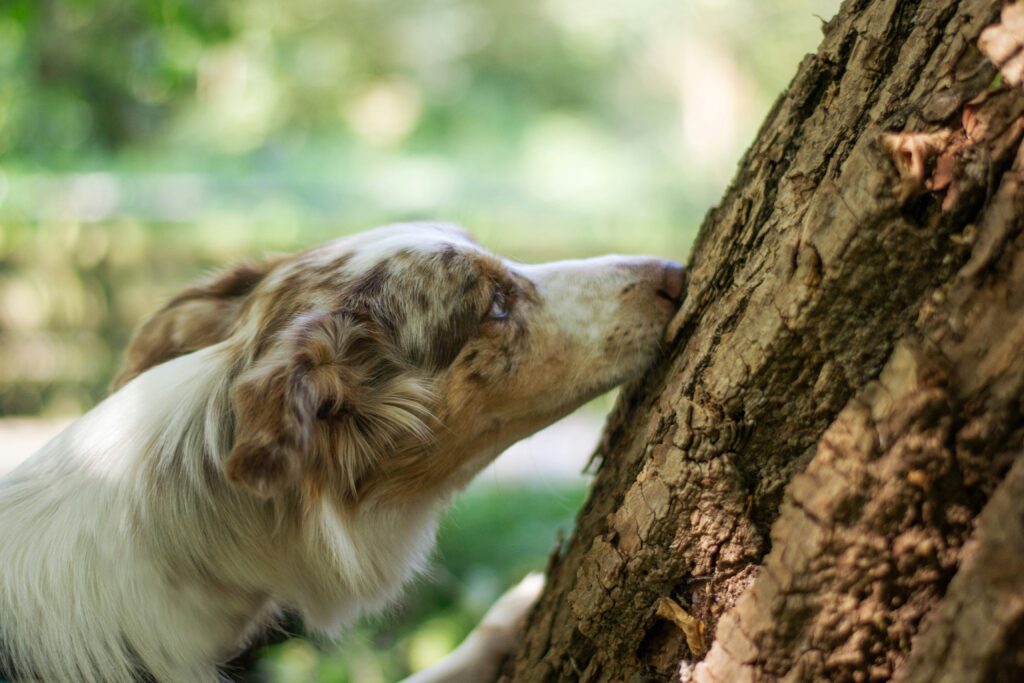
Photo by Phil Robson on Unsplash

When families reach out to dog trainers, they often start with the same request: “We need our dog to be more obedient.” They want their dog to sit on command, walk perfectly on leash, come when called, and stop doing all those annoying dog things—the jumping, the barking, the counter surfing, the midnight zoomies.

But here’s what I’ve come to understand through my work with families and their dogs, informed by the science of dog cognition and behavior: obedience and enrichment are fundamentally different approaches to living with dogs, and only one of them actually addresses what your dog needs.

Let me explain why understanding this difference might completely transform your relationship with your dog.

What Obedience Really Is (And What It Isn’t)

Obedience training focuses on teaching dogs to perform specific behaviors on cue—sit, stay, down, come, heel. It’s about compliance, control, and getting your dog to do what you want, when you want it. Traditional obedience asks dogs to suppress their natural behaviors and respond to human commands regardless of what they’re feeling or needing in that moment.

Don’t get me wrong—having a dog who understands basic cues can be helpful for safety and household harmony. Knowing “wait” at doorways or “leave it” when they spot something potentially dangerous on a walk serves a practical purpose.

But obedience training alone doesn’t ask the most important question: Why is your dog doing the behavior you’re trying to stop?

When we focus exclusively on obedience, we’re treating dogs like machines that need programming rather than sentient beings with complex emotional lives, genetic predispositions, environmental needs, and individual learning histories. We’re asking them to perform without considering what they’re trying to communicate through their behavior.

Understanding Enrichment: Meeting Needs, Not Demanding Compliance

Enrichment takes a completely different approach. Instead of asking “How do I make my dog stop doing that?”, enrichment asks “What does my dog need that they’re not getting?”

Enrichment is about providing opportunities for dogs to engage in species-appropriate behaviors that fulfill their genetic, environmental, emotional, and cognitive needs. It’s grounded in understanding the L.E.G.S.® framework—Learning, Environment, Genetics, and Self—which recognizes that behavior isn’t random or a training failure. It’s information about what’s working and what’s missing in a dog’s life.

When I work with families, enrichment means:

  • Giving a Scent Hound nose work opportunities instead of demanding they ignore every smell on a walk
  • Providing a Terrier with appropriate digging and shredding outlets instead of punishing their genetic drive to hunt small prey
  • Offering a Herding Dog movement-based games and jobs instead of expecting them to be calm and still all day
  • Understanding that a Livestock Guardian needs to patrol and observe rather than training them out of their vigilance
  • Recognizing that a Sight Hound might need to chase something (like a flirt pole) instead of punishing them for taking off after squirrels

Enrichment acknowledges that there are no problem behaviors, only unmet needs waiting to be understood.

The Science Behind Why Enrichment Works

Research in dog cognition, particularly the work of scientists like Brian Hare, shows us that dogs are sophisticated social learners who experience complex emotions and make decisions based on their environment, past experiences, and genetic predispositions. They’re not blank slates waiting for training—they’re individuals with histories, personalities, and needs.

When we understand behavior through the L.E.G.S.® framework, we see that:

Learning (L): Every dog has a unique learning history. A dog who’s been punished for barking hasn’t learned not to bark—they’ve learned that expressing their needs leads to conflict. Enrichment provides positive learning opportunities that teach dogs what to do, not just what not to do.

Environment (E): A dog’s physical and social environment profoundly impacts their behavior. A dog who’s understimulated, over-aroused, or living in environmental chaos isn’t being disobedient—they’re responding to their circumstances. Enrichment addresses environmental factors that create behavioral challenges.

Genetics (G): This is where breed-specific needs become crucial. A Border Collie’s need to herd isn’t a training problem—it’s genetic purpose seeking an outlet. A Beagle’s nose-to-ground focus isn’t disobedience—it’s what Scent Hounds were literally bred to do for centuries. When we provide breed-appropriate enrichment, we honor dogs’ genetic heritage instead of fighting against it.

Self (S): Each dog is an individual with their own personality, preferences, fears, and joys. What enriches one dog might stress another. True enrichment requires getting to know your specific dog—not following a one-size-fits-all training program.

What This Looks Like in Real Life

Let me give you a real example that illustrates the difference.

This is the kind of situation families often face: a young Labrador Retriever is ‘destructive’ and ‘won’t listen.’ The family has tried obedience training. Their dog knows ‘sit’ and ‘down,’ but continues to destroy shoes, dig in the backyard, and pull on leash during walks.

The obedience approach would focus on more training—stronger corrections for pulling, more consistent punishment for destructive behavior, perhaps a crate for longer periods when they can’t supervise.

The enrichment approach asks different questions:

  • How much retrieval opportunity does this Gun Dog get daily? (Genetics)
  • What does their daily routine look like? Are they getting enough physical and mental stimulation? (Environment)
  • What happens right before the destructive behavior? Is the dog bored, anxious, or understimulated? (Learning)
  • What is this specific dog’s personality and energy level? Do they prefer water retrieves? Food puzzles? Sniffing games? (Self)

When we shift to enrichment, we might discover this Lab needs:

  • Multiple daily opportunities to carry things (Labradors were bred to retrieve!)
  • Water play or swimming several times a week
  • Sniff walks where pulling is expected and encouraged
  • Food puzzles and scatter feeding instead of bowl meals
  • Appropriate chewing outlets like frozen Kongs or bully sticks
  • A digging pit in the backyard with buried treasures

Suddenly, the “disobedient” dog isn’t destroying shoes because they’re getting appropriate outlets for their need to mouth, carry, and work. They’re not pulling on walks because they’re getting dedicated sniff time where pulling is the whole point. They’re not digging up the garden because they have a designated digging zone.

The behavior changed not because the dog learned to be more obedient, but because their needs were finally being met.

Why Obedience Often Fails (And What Happens Instead)

Here’s the uncomfortable truth: obedience training often “works” temporarily by suppressing behavior through pressure, corrections, or punishment—not by addressing underlying needs.

A dog might stop barking when punished with a shock collar, but they haven’t stopped feeling anxious, bored, or alert to perceived threats. They’ve just learned that expressing those feelings leads to pain. The anxiety remains; the communication has been silenced.

A dog might stop pulling on leash after enough leash corrections, but they haven’t stopped needing to sniff or move at their own pace. They’ve just learned that following their nose leads to discomfort. The need remains; the outlet has been removed.

This is why behavior “problems” so often return or morph into new issues. We’ve addressed the symptom without treating the cause.

Enrichment, on the other hand, provides appropriate outlets for natural behaviors. It says “Yes, you can dig—but here in this designated spot” instead of “No, never dig anywhere.” It says “Yes, you can sniff obsessively on these decompression walks” instead of “No, heeling only.”

Enrichment Isn’t Just About Toys and Puzzles

When families hear “enrichment,” they often think it means buying more toys or fancy puzzle feeders. While those can be part of enrichment, the concept is much deeper.

True enrichment includes:

Sensory Enrichment: Opportunities to use all five senses—sniffing walks, listening to nature sounds, watching the world from a window perch, exploring different textures underfoot

Physical Enrichment: Movement that matches genetic purpose—retrieval games for Gun Dogs, chase games for Sight Hounds, digging opportunities for Terriers, free running for Natural breeds

Social Enrichment: Appropriate interaction with humans and other dogs based on each dog’s social needs and preferences

Cognitive Enrichment: Problem-solving opportunities like food puzzles, scent work, learning new tricks they actually enjoy

Environmental Enrichment: Variety in daily life—new walking routes, novel experiences, safe exploration opportunities

Rest and Decompression: Yes, enrichment includes adequate sleep and downtime! Many “disobedient” dogs are actually overtired and overstimulated.

The Role of Choice in Enrichment

Here’s something that makes enrichment fundamentally different from obedience: agency and choice.

Obedience training typically removes choice. The dog must sit when told, regardless of whether they want to or feel safe doing so in that moment. They must walk at the handler’s pace, focusing on the human rather than their environment.

Enrichment provides choice. On a sniff walk, your dog chooses where to smell and for how long. During scatter feeding, they choose which path to take finding food. With multiple enrichment options available, they choose which activity meets their needs right now.

Research shows that having control over their environment reduces stress in dogs and increases their ability to cope with challenges. When dogs have opportunities to make choices throughout their day, they’re more resilient, confident, and emotionally balanced.

This doesn’t mean chaos or no boundaries. It means structuring your dog’s life so they have appropriate outlets and agency within safe parameters.

Enrichment Changes the Relationship

When I talk with families about shifting from an obedience mindset to an enrichment mindset, something profound happens in the human-dog relationship.

Instead of seeing their dog as something to be controlled and corrected, families start seeing their dog as an individual to be understood and supported. Instead of frustration over “disobedience,” there’s curiosity about unmet needs. Instead of demanding compliance, there’s collaboration toward meeting everyone’s needs—human and canine.

Dogs aren’t barometers for family emotional health because they’re perfectly obedient. They’re barometers because they’re authentic—they show us when something’s off, when needs aren’t being met, when the household system needs adjustment.

When we meet our dogs’ enrichment needs, we’re not just changing their behavior—we’re honoring who they are.

Finding the Balance

Does this mean basic cues and boundaries don’t matter? Of course not. There’s a place for teaching dogs practical skills that keep them safe and make coexistence easier.

But those cues work better when taught and practiced within a framework of met needs. A well-enriched dog has better impulse control, more resilience, improved focus, and stronger emotional regulation. They’re more capable of learning because they’re not in a constant state of stress from unmet needs.

The question isn’t “obedience OR enrichment”—it’s understanding that enrichment must come first. When your dog’s genetic needs, environmental needs, emotional needs, and individual preferences are being addressed through thoughtful enrichment, any practical skills you want to teach become exponentially easier.

What This Means for Your Family

If you’re reading this and recognizing that you’ve been focusing on obedience while your dog’s enrichment needs have been neglected, I want you to know: this isn’t about guilt. It’s about new information opening new possibilities.

The beauty of the enrichment approach is that it’s individualized. There’s no one-size-fits-all program to follow, no perfect training protocol to execute. There’s just your specific dog, with their unique combination of Learning, Environment, Genetics, and Self, waiting for you to see their behavior as communication rather than defiance.

Start by getting curious:

  • What breed or breed mix is your dog, and what were those breeds originally bred to do?
  • What does a typical day look like for your dog? Where might needs be going unmet?
  • What does your dog do when given complete freedom to choose? (This tells you what they’re intrinsically motivated to do!)
  • What environments or activities seem to bring your dog joy and satisfaction versus stress or frustration?

Your dog isn’t broken and doesn’t need fixing through obedience. They need understanding, appropriate outlets, and a life that honors who they are.

Moving Forward: From Commands to Connection

The shift from obedience to enrichment isn’t just a different training method—it’s a different philosophy of living with dogs. It’s the difference between seeing dogs as subordinates who need discipline versus seeing them as family members who deserve to have their needs met with the same consideration we’d give any loved one.

As a Family Dog Mediator, my work isn’t about teaching dogs to be more obedient. It’s about helping families understand their dogs well enough to create environments where both species can thrive together. It’s about recognizing that behavioral challenges are almost always communication about unmet needs.

When we provide true enrichment—when we honor our dogs’ genetics, support their learning, optimize their environment, and celebrate their individual selves—we don’t need to demand obedience. We get cooperation, partnership, and a relationship built on mutual respect and understanding.

That’s not just a better way to live with dogs. It’s the only way that truly honors who they are.

Filed Under: Insights

We’re Not Being Difficult—We’re Being Responsible: A Dog Rescue Volunteer’s View

October 4, 2025 by Jennyfer Tan Leave a Comment

Photo by Alexander Grey on Unsplash

“Your adoption application is so long!”

“Why do you need to do a home visit?”

“Other rescues don’t ask this many questions.”

“You’re making it too hard to adopt a dog.”

As a volunteer for a dog rescue, these complaints come up regularly. The pressure to streamline adoption processes is real—from frustrated applicants, from critics on social media, from well-meaning supporters who just want to see dogs leave the shelter quickly.

But here’s what those critics don’t see: the returned dogs, the heartbroken families, the preventable tragedies that happen when rescues prioritize speed over thoroughness.

The Real Cost of “Easy” Adoptions

Working in rescue means witnessing firsthand what happens when vetting is skipped to speed up adoptions. Everyone pays the price:

The dog experiences the trauma of another failed placement, develops new behavioral problems from the stress, and becomes harder to place successfully with each return.

The family feels guilt and failure, sometimes faces dangerous situations they weren’t prepared for, and may never adopt again because of the traumatic experience.

The rescue deals with the emotional toll on staff and volunteers like myself, spends resources managing preventable crises, and damages its reputation when placements fail publicly.

Future adopters face even stricter processes as rescues overcorrect after bad experiences, and dogs with similar profiles get passed over because of one bad match.

What Thorough Vetting Actually Protects

Physical Safety

Some matches aren’t just unsuccessful—they’re dangerous. A large, strong dog with barrier frustration placed in a home with small children and no fencing. A dog with resource guarding tendencies going to a family with toddlers who don’t yet understand boundaries. A dog with a high prey drive placed with a family who has pet rabbits.

These aren’t hypothetical scenarios. As volunteers, we see them happen regularly when rescues prioritize speed over safety. Thorough vetting identifies these mismatches before they become tragedies.

Emotional Wellbeing

A dog with severe separation anxiety placed with a family who works full-time outside the home will suffer daily. A high-energy working breed going to elderly adopters who can’t provide adequate exercise will become frustrated and destructive. A shy, sensitive dog entering a chaotic household with young children will live in constant stress.

These dogs aren’t “bad fits”—they’re living in environments that prevent them from ever feeling secure or happy. No amount of good intentions compensates for fundamental incompatibility.

Financial Stability

Adopters deserve to know what they’re taking on financially. A dog with ongoing medical needs requires adopters who can afford long-term veterinary care. A dog with behavioral challenges may need professional training support. A large breed puppy will have significantly higher food and healthcare costs than a small adult dog.

When rescues aren’t transparent about these realities, families face impossible financial decisions down the road—often resulting in the dog being returned or, worse, neglected. Those of us in rescue see these heartbreaking situations unfold, knowing they could have been prevented with better upfront communication.

Long-Term Success

The goal isn’t just to get dogs out of the shelter—it’s to get them into homes where they’ll thrive for their entire lives. A successful adoption means the dog never enters the rescue system again. That only happens when the match is right from the start.

What Good Vetting Looks Like

Understanding the Adopter’s Real Life

It’s not enough to know someone “wants a dog.” Good vetting explores:

  • What does their typical day actually look like?
  • What experience do they have with dogs, particularly dogs with challenges?
  • What are their realistic expectations for exercise, training, and behavioral management?
  • How will they handle common challenges like house training accidents, destructive chewing, or initial adjustment period struggles?
  • What support systems do they have in place?
  • What would cause them to return the dog?

These questions aren’t invasive—they’re necessary to understand whether someone is prepared for the specific dog they’re interested in.

Matching Lifestyle to Dog Needs

A working professional who loves hiking on weekends might be perfect for a high-energy dog who can settle during the workday. That same person would be a terrible match for a dog with severe separation anxiety.

A retired couple with all day at home might be ideal for that anxious dog but completely wrong for a young, energetic breed that needs intense physical activity.

Good vetting identifies these nuances rather than applying one-size-fits-all criteria.

Honest Conversations About Challenges

Every dog has challenges, especially rescue dogs. Thorough vetting includes honest discussions about:

  • What the adjustment period really looks like
  • What behavioral challenges might emerge and how to address them
  • What resources are available for support
  • What constitutes a solvable problem versus a fundamental incompatibility

Adopters who are prepared for realistic challenges are far more likely to work through them than those who were led to believe adoption would be seamless.

Assessing Problem-Solving Approach

How adopters respond to hypothetical challenges tells rescues a lot about how they’ll handle real ones:

“What would you do if the dog had accidents in the house for the first month?”

“How would you handle it if the dog showed fear around your children?”

“What if the dog destroyed furniture while adjusting to being left alone?”

Answers reveal whether someone views challenges as problems to solve collaboratively or dealbreakers requiring return.

Addressing Common Objections

“You’re Being Too Picky”

Being selective isn’t the same as being unreasonable. Rescues that carefully match dogs to appropriate homes have higher success rates and lower return rates. That’s not being picky—that’s being responsible.

Every dog who returns to the shelter takes up resources that could help another dog. Every failed placement makes that dog harder to place successfully. Careful vetting prevents waste and protects the dogs who are counting on us.

“Good Homes Will Go Elsewhere”

Good adopters understand that thorough vetting protects them too. They appreciate rescues that take the time to ensure good matches because they want a successful adoption as much as the rescue does.

Adopters who are genuinely prepared for the responsibilities of dog ownership aren’t deterred by thorough applications—they’re reassured by them.

“Dogs Are Sitting in Shelters Too Long”

A dog who waits an extra month for the right home is better off than a dog who gets adopted quickly into the wrong home, gets returned, develops new behavioral problems from the stress, and becomes difficult to place at all.

Time in a stable shelter environment with proper care is preferable to the trauma of failed placements. As volunteers who spend time with these dogs, we see how much damage a failed adoption does to them. The goal is permanent homes, not quick exits.

“We Need to Compete With Pet Stores and Breeders”

Rescues don’t need to compete by lowering standards. They compete by offering something breeders and pet stores can’t: transparency, support, and dogs whose personalities are fully known.

The adopters who want convenience over compatibility aren’t the adopters who will succeed with rescue dogs anyway. Let them go elsewhere. Focus on the adopters who value the thorough approach.

Building a Sustainable Vetting Process

Efficient Doesn’t Mean Easy

Good vetting can be streamlined without being superficial. Technology helps:

  • Online applications that can be completed at the adopter’s convenience
  • Video calls for home visits when in-person isn’t practical
  • Standardized questions that still allow for nuanced answers
  • Clear timelines so adopters know what to expect

Efficiency is about respecting everyone’s time, not about cutting corners on assessment quality.

Transparency at Every Step

Adopters deserve to understand why rescues ask specific questions. Explaining the reasoning behind vetting requirements reduces frustration:

“We ask about your work schedule because some of our dogs need someone home during the day due to separation anxiety, while others are fine being alone. This helps us match you with a dog who fits your lifestyle.”

“We do home visits to look for safety concerns like unsecured pools or gaps in fencing that might be dangerous for certain dogs. It’s about protecting both you and the dog.”

Supporting Success After Adoption

Thorough vetting continues after adoption:

  • Check-ins during the adjustment period
  • Access to behavior support resources
  • Clear communication about when to ask for help
  • Creating a culture where adopters feel comfortable reaching out before small problems become big ones

The rescue’s job doesn’t end at adoption—it extends through the critical adjustment period and beyond.

The Ethical Imperative

Every dog that comes into rescue care depends on the humans in charge to make good decisions on their behalf. These dogs can’t advocate for themselves. They can’t say “this home feels wrong” or “I’m not compatible with this family.”

As volunteers, we become their voice and their protection. That responsibility demands thoroughness, even when it’s inconvenient, even when it’s criticized, even when it means dogs wait longer for homes.

When Vetting Reveals Incompatibility

Sometimes thorough vetting reveals that an adopter isn’t right for a specific dog—or isn’t ready for dog ownership at all. These are hard conversations, but they’re necessary ones.

Saying no to a bad match isn’t giving up on the dog or rejecting the adopter—it’s protecting both. It’s redirecting the adopter toward a better match or toward resources that will help them prepare for future dog ownership. It’s giving the dog a chance at a truly successful placement rather than a quick failure.

The Bottom Line

Thorough adopter vetting isn’t about making adoption difficult. It’s about making it successful.

Every question asked, every reference checked, every home visit completed is an investment in a permanent placement. It’s insurance against preventable returns. It’s protection for dogs who have already experienced too much instability and uncertainty.

The criticism will continue. Frustrated applicants will complain on social media. Other organizations with looser standards will move dogs faster. But none of that changes the fundamental truth: careful matching protects everyone involved and creates the lasting placements every rescue dog deserves.

The dogs in our care have already experienced abandonment, instability, or worse. They deserve advocates who will take the time to get it right—even when getting it right takes longer, even when it’s harder, even when it’s unpopular.

As volunteers who dedicate our time to these dogs, we owe them nothing less than our best effort to find them truly compatible homes. That’s not making adoption too difficult. That’s making it responsible.


The author volunteers with a dog rescue organization and is a certified Family Dog Mediator and Good Dog Academy Professional Dog Trainer specializing in rescue dog behavioral assessment and placement support.

Filed Under: Insights

Form Follows Function: Why Your Dog’s Job Should Guide Your Choice

October 2, 2025 by Jennyfer Tan Leave a Comment

Photo by James Haworth on Unsplash

When scrolling through social media or walking through the neighborhood, it’s easy to fall in love with a dog’s appearance. That fluffy coat, those piercing blue eyes, or that perfectly compact size can capture our hearts instantly. But choosing a dog based on looks alone is like buying a sports car to haul lumber—you might end up with something beautiful that can’t do what you actually need.

The Real Cost of Form Over Function

Dogs weren’t bred to be living sculptures. Each breed was developed for specific work: herding sheep, hunting game, guarding property, or providing companionship. When we ignore these deeply ingrained purposes and select purely on aesthetics, we often create problems for both ourselves and our dogs.

Consider the person who chooses a Border Collie because they’re gorgeous and highly intelligent, but lives in a small apartment and works long hours. That dog’s herding instincts don’t disappear just because there are no sheep around. Instead, they might try to “herd” children, chase cars obsessively, or develop destructive behaviors from unused mental energy.

Matching Energy to Lifestyle

A dog’s function directly relates to their energy requirements and exercise needs. Working breeds like German Shepherds, Australian Cattle Dogs, and Jack Russell Terriers were bred to work all day. They need jobs—real or manufactured ones. If your idea of weekend adventure is binge-watching Netflix, a high-energy working breed will likely become your biggest source of stress rather than joy.

On the flip side, choosing a dog whose function aligns with your lifestyle creates harmony. If you’re an avid hiker, a breed developed for endurance work might be perfect. If you want a calm companion for quiet evenings, breeds developed primarily for companionship will likely fit better.

Special Considerations for Rescue Dogs

When adopting from shelters or rescues, the form-over-function trap becomes even more problematic. Many rescue dogs end up homeless precisely because their original families chose them for the wrong reasons—often based on appearance, size, or impulse rather than compatibility.

Shelter staff and rescue volunteers are invaluable resources for understanding a dog’s actual needs and temperament. They’ve observed these dogs in various situations and can tell you whether that adorable Husky mix actually needs three hours of exercise daily, or if the gentle-looking pit bull mix is actually reactive with other dogs.

Mixed breeds in shelters often carry the traits of their dominant breeds, but these aren’t always obvious from appearance alone. A small, fluffy dog might have significant terrier genetics that manifest as high prey drive and stubborn independence. That medium-sized, calm-looking dog might be part cattle dog and become destructive without proper mental stimulation.

Ask shelter staff or the rescue about the dog’s history if known, their behavior in different situations, exercise requirements, and any behavioral challenges. Many rescues also offer foster-to-adopt programs that let you experience the dog’s true personality in your home environment before making the commitment permanent.

Temperament Runs Deeper Than Training

While training can modify behavior, it can’t fundamentally change a breed’s temperament. Guardian breeds will always be somewhat suspicious of strangers—that’s not antisocial behavior that needs fixing, it’s their job. Terriers will always have prey drive. Retrievers will always want to carry things in their mouths.

For rescue dogs, these traits can be modified by their experiences, but the underlying genetic tendencies remain. A rescue dog who was poorly socialized might be more intense in displaying breed-typical behaviors. However, these traits can be managed and channeled appropriately with patience and understanding. The key is working with a dog’s natural instincts rather than against them.

The Health Connection

Form-focused breeding often emphasizes extreme physical features that can compromise health and function. The shortened airways of flat-faced breeds, the back problems common in elongated breeds, or the joint issues in giant breeds often result from prioritizing appearance over the dog’s ability to breathe, move, and live comfortably.

Many rescue dogs come from backgrounds where health wasn’t prioritized, but mixed breeds often have fewer genetic health issues than purebreds due to hybrid vigor. However, rescue dogs may come with unknown health histories, making it even more important to choose based on current functional needs rather than just appearance.

Finding Your Functional Match

Start by honestly assessing your lifestyle, living situation, and what you want from a dog relationship. Are you looking for a jogging partner, a gentle family companion, a watchdog, or a couch buddy? How much time can you realistically dedicate to exercise, training, and grooming?

When working with shelters or rescues, be upfront about your lifestyle and expectations. A good rescue organization wants to make successful matches and will help guide you toward dogs whose needs align with what you can provide. Don’t be offended if they suggest a different dog than the one that caught your eye—they’re trying to prevent future surrenders.

Consider fostering first if possible. This gives you a realistic picture of what life with that dog would be like and helps you determine if their needs truly match your capabilities.

When the Perfect Match Isn’t Perfect Looking

Some of the best rescue dogs might not photograph well or catch your eye immediately. The overlooked senior dog might be perfectly content with gentle walks and lots of couch time. The plain-looking mixed breed might have the exact energy level and temperament you need. The dog with one ear or a slight limp might be functionally perfect for your lifestyle.

Rescue organizations often have dogs who’ve been returned through no fault of their own—simply because form was chosen over function. These dogs deserve families who understand and appreciate them for what they can offer rather than just how they look.

Beauty in Purpose

This doesn’t mean you have to choose an ugly dog. Most breeds are beautiful in their own right, and there’s something particularly attractive about a dog doing what they were bred to do well. A Border Collie moving sheep with intense focus, a Golden Retriever swimming after a duck, or a Mastiff calmly watching over their family—these dogs exhibit a beauty that comes from purpose and fulfillment.

When function guides your choice—whether you’re buying from a breeder or adopting from rescue—you’re more likely to end up with a dog who’s not only physically appealing to you but also mentally satisfied, behaviorally manageable, and genuinely happy. That contentment and harmony creates its own kind of beauty—one that deepens rather than fades over time.

The right dog for your life isn’t necessarily the most Instagram-worthy one. It’s the one whose natural instincts, energy level, and temperament allow both of you to thrive together. In rescue situations, it might be the dog who’s been waiting the longest because people overlooked their perfect personality in favor of flashier options. Choose wisely, and you’ll have a beautiful partnership built on compatibility rather than just good looks.

Filed Under: Insights

What Raising My Child with Autism Taught Me About Understanding ‘Difficult’ Dogs

September 29, 2025 by Jennyfer Tan Leave a Comment

Photo by mehdi farokhanari on Unsplash

As both a Family Dog Mediator and a parent of a twice-exceptional young adult with autism, I’ve lived in two worlds that share more similarities than most people realize. The same patience, understanding, and individualized approach that helps me work with reactive or “difficult” dogs has been essential in raising my gifted child with autism through years of inflexibility, hyperfocus, and what others might call “stubborn” behavior.

The L.E.G.S.® framework—Learning, Environment, Genetics, and Self—has been my roadmap for both, I just didn’t realized it. Just as we wouldn’t punish a dog for being triggered by their genetics or environment, we can’t expect traditional parenting methods to work for a neurodivergent child whose brain simply processes the world differently.

Learning: Different Doesn’t Mean Deficient

When my child was younger, people would often say, “They’re so smart, but they just won’t…” Fill in the blank: follow directions, transition between activities, work on non-preferred tasks. Sound familiar to anyone who’s heard “Your dog knows better, they’re just being stubborn”?

Both scenarios miss the point entirely. My child wasn’t choosing to be difficult any more than a reactive dog is choosing to lunge at other dogs. They were both responding to their neurological wiring in the only way they knew how.

In dog training, we’ve learned that a dog who can “sit” perfectly at home might completely fall apart at the dog park. Their learning is context-dependent, affected by stress, excitement, and environmental factors. The same is true for individuals with autism. My child could explain complex scientific concepts and conduct detailed research but couldn’t handle the unpredictability of fire drills. They could hyperfocus on special interests for hours but needed extensive support to transition to dinner.

Understanding this meant adjusting our approach. Just as we set dogs up for success by managing their environment and breaking down learning into manageable steps, we learned to scaffold my child’s learning around their strengths while accommodating their processing differences.

Environment: The Hidden Game-Changer

Every dog trainer knows that environment is often the missing piece in behavior modification. A dog might be perfectly behaved at home but reactive on busy streets. Change the environment, change the behavior.

The same principle transformed our family life. We stopped trying to force my child into environments that set them up to fail and started crafting spaces where they could thrive. Noise-canceling headphones for overwhelming spaces. Predictable routines during chaotic times. Quiet corners for decompression.

I remember watching other parents judge us for “accommodating” our child’s needs—the same way some dog guardians judge force-free training as “spoiling” their dogs. But here’s what I learned from both experiences: meeting someone where they are isn’t spoiling them. It’s giving them the foundation they need to succeed.

When we stopped seeing accommodations as weakness and started seeing them as smart management, everything shifted. Just like how we don’t blame a noise-phobic dog for needing a safe space during fireworks, we stopped expecting our child to simply “get over” sensory overwhelm or executive functioning challenges.

Genetics: Playing the Hand You’re Dealt

In dog training, we talk about genetic predispositions all the time. A Border Collie isn’t being “difficult” when they try to herd children—they’re being a Border Collie. A rescue dog with unknown genetics might have triggers we never anticipated.

Autism works similarly. My child’s brain is beautifully, authentically designed differently. Their need for routine isn’t a character flaw—it’s neurological architecture. Their hyperfocus isn’t laziness when they struggle with non-preferred tasks—it’s how their attention system works.

The breakthrough came when we stopped fighting against their genetic makeup and started working with it. Instead of seeing their inflexibility as a problem to fix, we learned to see it as information about how their brain works best. We built structure around their need for predictability, just like we’d manage a genetically anxious dog’s triggers.

This doesn’t mean we never challenged our child to grow—just like we still train dogs with genetic predispositions. But we did it with realistic expectations and appropriate support, honoring who they are while helping them develop coping strategies.

Self: Honoring the Individual

Here’s where both dog training and parenting children with autism get deeply personal. Every dog is an individual, even within breeds. Every person with autism is unique, even with shared characteristics. The methods that work for one might completely backfire with another.

With my child, I had to let go of comparing them to neurotypical peers, just like I help dog families stop comparing their reactive rescue to the perfectly trained Golden Retriever next door. My job wasn’t to make my child “normal”—it was to help them become the best version of themselves.

This meant celebrating their intense interests instead of trying to broaden them. It meant finding their communication style instead of forcing them into neurotypical social norms. It meant understanding that their way of showing love and connection might look different from what I expected.

The Real Magic: Relationship Over Compliance

Both dog training and autism parenting taught me that relationship trumps compliance every time. I could have spent years trying to force my child into neurotypical behaviors, just like dog guardians spend years trying to dominate their way to obedience. But neither approach builds trust or long-term success.

Instead, when I approached both my dogs and my child with curiosity rather than judgment, everything changed. “What are you trying to tell me?” became more important than “Why won’t you just do what I ask?”

Let me be clear—this wasn’t a magic transformation that happened overnight. Even now, I still have moments where I lose my patience, where I default to old patterns of thinking, where I catch myself expecting my child to just “get it” without the support they need. There are days when I’m tired, overwhelmed, and I forget everything I know about neurodivergent brains and start expecting neurotypical responses.

But here’s what I’ve learned: those moments don’t make me a failure as a parent any more than a dog having a reactive episode means their training has failed. They’re both information about stress, capacity, and the need to step back and regroup. When I catch myself slipping into impatience or frustration, I take a deep breath and remember why I’m doing this differently in the first place—because my child deserves to be understood and supported exactly as they are, not molded into who I think they should be.

Now, as my child has grown into a capable young adult, I see the payoff of this approach. They’ve learned to advocate for their needs, develop strategies that work with their brain instead of against it, and build authentic relationships based on mutual understanding.

The same transformation happens with dogs when families stop trying to suppress natural behaviors and start channeling them appropriately. It’s not about lower expectations—it’s about better understanding.

The Takeaway for All Families

Whether you’re living with a dog who resource guards or a child who struggles with transitions, the L.E.G.S.® framework offers a compassionate roadmap. Look at learning styles, modify environments, respect genetics, and honor the individual in front of you.

Both experiences have taught me that “difficult” behaviors are often just misunderstood communication. When we take time to listen—really listen—we usually find that what looks like defiance is actually a nervous system doing its best to cope.

And in both cases, the families who embrace this understanding don’t just solve behavior problems—they build deeper, more authentic relationships based on acceptance and accommodation rather than control and compliance.

That’s the real gift of thinking differently about both dogs and neurodivergent children: we learn that love isn’t about making someone fit our expectations. It’s about understanding who they are and helping them thrive exactly as they are.

Filed Under: Insights

  • « Go to Previous Page
  • Page 1
  • Page 2
  • Page 3

Blog Categories

  • Genetics
  • Insights
  • Learning
  • Myth-Busters
  • Urban Living

Work With Me

Single Dog Assessments


Multi-Dog Assessments

Products

  • The Canine Enrichment Vault: Your Lifetime Toolkit for Dog Behavioral Wellness The Canine Enrichment Vault: Your Lifetime Toolkit for Dog Behavioral Wellness $17.00

ABOUT

Jennyfer Tan is a Certified Family Dog Mediator and Professional Dog Trainer based in Vancouver, BC, serving families worldwide. She provides comprehensive behavioral and wellness assessments for all dogs—from everyday companions to those with complex needs—using the science-based L.E.G.S.® model + Total Welfare and Four Pillars Approach. Understanding before strategies, always.

Certifications

Follow Us

  • Facebook
  • Instagram
  • Pinterest

Copyright © R+R Canine Consulting2026 · Website by Fancy Girl Design Studio