The Behavior Behind the Behavior: Why Your Dog Does What They Do
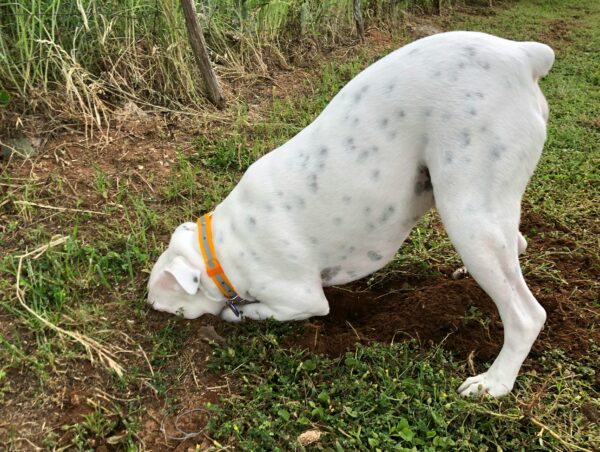
Your dog digs up the garden. Barks at the window. Humps the same stuffed toy every evening. It's easy to see these as problems to fix. But most of them are natural dog behaviors that simply have nowhere to go.
This series is about understanding those behaviors, one at a time, and making room for them in real homes.
Most "Problem" Behaviors Are Normal Dog Behaviors
Dogs were shaped over thousands of years to sniff, dig, chew, chase, scavenge, watch, and connect. Those drives didn't disappear when dogs moved onto our couches. What changed was the environment. City apartments, suburban yards, leashed walks, and long workdays leave very little space for a dog to be a dog.
When a need has no outlet, it tends to show up somewhere we don't want it.
What Is the Total Welfare Ethogram?
An ethogram is a catalogue of the behaviors a species naturally performs. The Total Welfare Ethogram, created by applied ethologist Kim Brophey and the Family Dog Mediation Education Center, maps 52 dog behaviors, from scent tracking and digging to social grooming and resting outdoors.
The idea behind it is called behavioral diversity: dogs do best when they can express a wide range of these behaviors, not just the few that fit our routines.
Understanding a Behavior Doesn't Mean Allowing It Everywhere
Take mounting, or humping. Most of us stop it on sight because it's awkward. But mounting is a normal dog behavior, and it often has less to do with sex than with releasing extra energy or coping with overstimulation.
My dog Rosco has a stuffed dog named Goldie that he's had since he was a puppy. For years we stopped him whenever he humped her. Once I started watching instead, I noticed a pattern: he went to Goldie when he had energy to burn off or when the day had been too much.
That doesn't mean anything goes. Mounting a person's leg, a child, or a dog who isn't into it is a problem, and it's worth interrupting kindly. The goal isn't to erase the behavior. It's to give it the right place, like redirecting to a designated toy, and to notice what's building up before it happens.
That's the balance this series is about: understanding the need, then shaping where and how it gets met.
Our Dogs Depend on Us for Almost Everything
Where they go, when they eat, who they meet, what they get to do all day. In welfare science, that level of dependence makes dogs captive animals. It's not a word most of us like. It sounds like cages.
But captive doesn't mean uncared for. The best keepers of any animal are the ones who study that animal's nature and build a life around it. That's what loving a dog well looks like, too.
Why Meeting Needs Comes Before Changing Behavior
Guidance and teaching still matter. Our world is confusing for dogs, and they need our help to navigate it. But a dog whose needs are met is far better equipped to learn, cope, and settle. Often, when we change the dog's world first, there's much less left to change in the dog.
What to Expect in This Series
Here on the blog, I'm exploring a selection of behaviors from the ethogram. Each post covers:
- Where the behavior comes from
- What need it serves
- Practical ways to support it in an urban or suburban home
Quick Answers
Why does my dog hump? Mounting is a normal dog behavior that can help release energy or cope with overstimulation. If it's directed at people or other dogs, redirect it to an appropriate toy. A sudden increase is worth a vet check, since discomfort can play a role.
Is it bad to stop natural dog behaviors? Redirecting is fine, and sometimes necessary. Removing every outlet usually backfires.
Need help reading your dog?
If a behavior is causing stress in your home, Book a Behavioral and Wellness Assessment with me.
This series draws on the Total Welfare Ethogram from the Family Dog Mediation Education Center.