• Skip to main content
  • Skip to primary sidebar
  • Skip to footer

R+R Canine Consulting

Certified Family Dog Mediator and Professional Dog Trainer

  • Home
  • About
  • Work with Me
  • Blog
  • Shop
  • Contact

Why Dogs Need to Sniff Everything: The Science Behind Canine Scent Communication

November 4, 2025 by Jennyfer Tan Leave a Comment

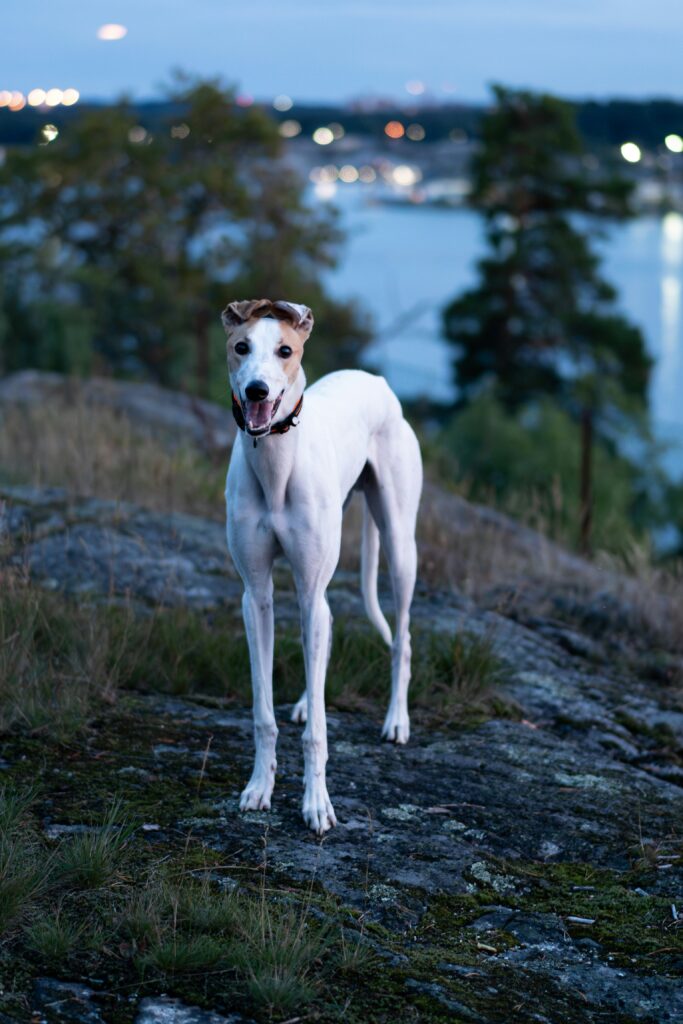
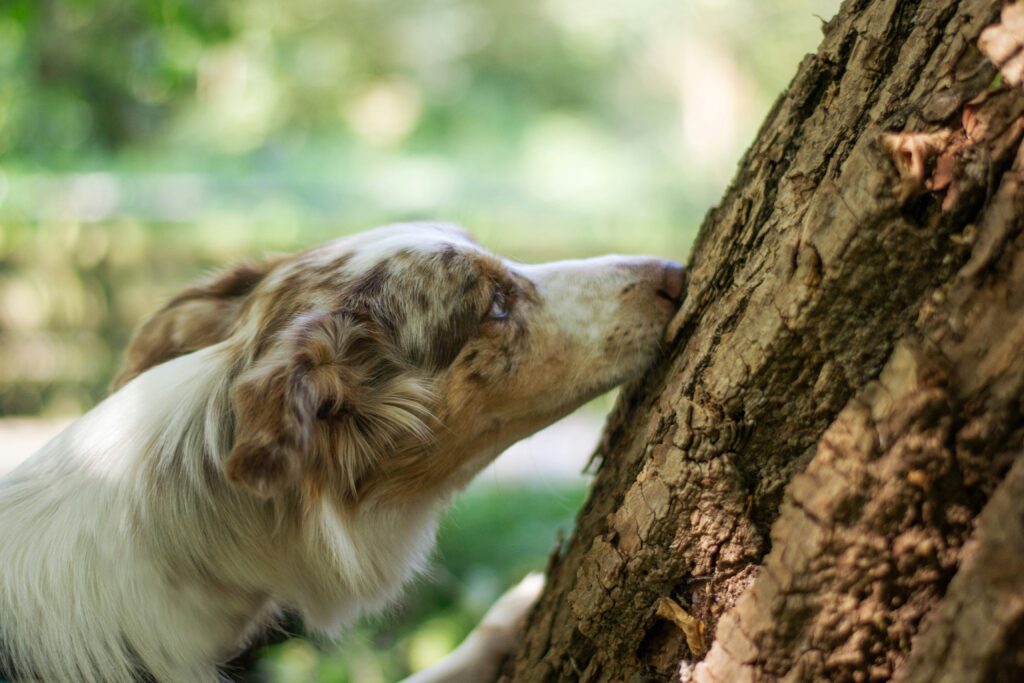
Photo by Ayla Verschueren on Unsplash

If you’ve ever felt impatient while your dog stops to sniff every lamp post, fire hydrant, and patch of grass on your walk, you’re not alone. But what looks like dawdling to us is actually your dog reading their daily newspaper, checking their social media feed, and leaving messages for friends—all through their incredible sense of smell.

The Extraordinary Canine Nose

Dogs don’t just smell better than humans; they experience the world through scent in a way we can barely comprehend. While humans have roughly 6 million olfactory receptors, dogs have up to 300 million, depending on the breed. The part of a dog’s brain devoted to analyzing smells is proportionally 40 times larger than ours.

To put this in perspective, if you could smell a teaspoon of sugar in your coffee, your dog could detect that same teaspoon of sugar in two Olympic-sized swimming pools. This isn’t just a better version of what we experience—it’s an entirely different sensory reality.

Dogs also possess a special organ called the vomeronasal organ (or Jacobson’s organ) located in the roof of their mouth. This remarkable structure allows them to detect pheromones and other chemical signals that provide information about other animals’ emotional states, reproductive status, and individual identity.

Why Sniffing Isn’t Optional—It’s Essential

For dogs, sniffing serves several critical functions:

Information Gathering: Every surface, object, and patch of ground tells a story. A single sniff can reveal which dogs passed by recently, their sex, age, health status, diet, emotional state, and even whether they’re familiar or a stranger.

Mental Stimulation: The canine brain is wired to seek out and process scent information. Sniffing activates the seeking system in your dog’s brain, releasing dopamine and creating feelings of satisfaction and engagement. Just 15-20 minutes of concentrated sniffing can be as mentally tiring as an hour of physical exercise.

Stress Relief: The act of sniffing activates the parasympathetic nervous system, which helps calm and regulate your dog’s emotional state. When dogs are anxious or overstimulated, sniffing behavior often increases as they attempt to self-soothe and gather information about their environment.

Environmental Awareness: Sniffing helps dogs build a mental map of their territory and stay informed about changes in their environment. This is especially important for dogs’ sense of security and confidence.

The “Pee-Mail” System: How Dogs Identify Each Other Through Urine

When your dog sniffs another dog’s urine, they’re not just smelling waste—they’re reading a complex chemical profile that’s as unique as a fingerprint. Here’s what makes this possible:

Chemical Signatures: Dog urine contains a cocktail of volatile organic compounds, hormones, and pheromones that create an individual scent signature. This signature is influenced by genetics, diet, health status, reproductive hormones, and even gut bacteria. No two dogs smell exactly alike.

The Information Highway: Through urine marking, dogs can determine:

  • The individual identity of the dog (have we met before?)
  • Their sex and reproductive status
  • Approximate age and size
  • Health status and diet
  • Stress levels or emotional state
  • How recently they passed by (scent degrades over time)
  • Social status or confidence level

Memory and Recognition: Studies have shown that dogs can remember individual scent signatures for years. Your dog isn’t just smelling; they’re accessing a scent-based memory bank to recognize old friends, identify rivals, and track family members.

Strategic Marking: Male and female dogs both mark, though the behavior looks different. Males typically mark in short, frequent bursts at vertical surfaces (the classic leg lift), while females may squat-mark or kick backward to spread scent. Both sexes are strategically placing their calling cards in high-traffic areas where other dogs are most likely to encounter them.

The Social Network You Can’t See

Think of the neighborhood as a complex social network where scent posts function like status updates. When your dog sniffs a tree, they might learn that three dogs passed by this morning: the spaniel from down the street (female, anxious, walked by two hours ago), an unfamiliar terrier (male, confident, marked over other scents—assertive behavior), and that golden retriever they met last week (excited, recently ate something interesting).

Your dog can even detect directionality—the pattern of scent helps them determine which direction another dog was traveling. This is why dogs often follow scent trails with such determination.

Why You Should Let Them Sniff

Understanding the complexity of canine olfaction reveals why sniffing is so much more than a biological quirk—it’s a fundamental need. When we constantly pull our dogs along on walks without allowing adequate sniffing time, we’re essentially forcing them through their world with their primary sense shut off.

Consider incorporating dedicated “sniff walks” into your routine, where the goal isn’t distance or speed but allowing your dog to engage fully with their environment. The mental enrichment, stress relief, and satisfaction this provides cannot be overstated. A dog who’s been allowed to sniff thoroughly is often calmer, more settled, and better able to focus on training or other activities.

The next time your dog pauses to thoroughly investigate a seemingly unremarkable spot on the sidewalk, remember: they’re not stalling or being stubborn. They’re reading the news, checking their messages, and experiencing their world the way nature designed them to. That patience you extend to let them sniff isn’t just kindness—it’s respect for who they fundamentally are.

Filed Under: Insights

How Time Change Affects Dogs (And How to Help Them Adjust)

October 28, 2025 by Jennyfer Tan Leave a Comment

We will be “falling back” an hour, and while you might be celebrating that extra hour of sleep, your dog’s internal clock didn’t get the memo. That’s because dogs don’t understand daylight saving time—and honestly, why should they? Their bodies are regulated by natural rhythms, routines, and the predictable patterns you’ve established together as a family.

If your dog has been waking you up an hour earlier than usual, pacing by the door when it’s not quite walk time, or seeming confused about meal schedules, you’re not imagining it. The time change genuinely affects our dogs, sometimes more significantly than it affects us. Let’s talk about why this happens and, more importantly, what we can do to help our dogs—and ourselves—through this biannual disruption.

Why Dogs Are So Affected by Time Changes

Unlike humans who can intellectually understand “the clocks changed,” dogs experience time through their circadian rhythms, routine patterns, and their deep attunement to family rhythms. When we suddenly shift everything by an hour, we’re essentially disrupting their entire understanding of how the day flows.

Dogs Are Creatures of Rhythm and Routine

Think about it from your dog’s perspective. They know that breakfast happens when the house smells a certain way, when light comes through the windows at a particular angle, when you shuffle into the kitchen in your robe. They know walk time by the way your energy shifts, by environmental cues, by the settling of the household. These aren’t just habits—they’re how dogs make sense of their world and feel secure in it.

When we change the clocks, we’re not just shifting numbers on a screen. We’re changing when they eat, when they go outside, when they get exercise, when the house gets quiet for sleep. For a species that thrives on predictability and reads the environment constantly for cues about what happens next, this is genuinely disorienting.

Their Bodies Don’t Know What Time It Is

Dogs operate on circadian rhythms just like we do—internal biological clocks that regulate sleep-wake cycles, hunger, body temperature, and hormone production. These rhythms are influenced by natural light cycles, not by what our phones tell us.

So when daylight saving time ends in fall and it suddenly gets dark much earlier in the evening, your dog’s body is still expecting dinner, play, and wind-down time based on natural light cues. When spring arrives and we “spring forward,” your dog’s body might still need sleep when you’re trying to get them up and active. Their internal clock takes time to adjust—usually about a week or so—and during that adjustment period, behaviors can emerge that communicate their confusion and unmet needs.

What You Might Notice in Your Dog

Every dog responds to disrupted rhythms differently, depending on their genetics, age, stress levels, and how rigid their daily routine typically is. You might see:

Changes in wake-up times: Your dog suddenly acting as their internal alarm clock at what is now 5 AM on your clock but still feels like 6 AM to them.

Appetite shifts: Seeming hungrier earlier or less interested in meals at the “new” time because their digestive system is still on the old schedule.

Bathroom urgency: Needing to go out earlier than usual or having accidents because their biological rhythms haven’t caught up with your new schedule.

Restlessness or anxiety: Pacing, whining, or seeming unsettled because the predictable patterns they rely on suddenly feel “off.”

Energy level mismatches: Being sleepy when you need them active or hyperactive when you’re trying to wind down for the evening.

Increased shadowing or clinginess: Following you more closely because the disrupted routine creates mild stress, and you are their secure base.

These aren’t “bad behaviors” or disobedience—they’re communication. Your dog is telling you that something in their world feels unpredictable right now, and they need help reestablishing security and rhythm.

How to Help Your Dog Adjust: Practical Strategies

The good news is that you can help your dog transition more smoothly through some thoughtful, gradual approaches that honor their need for predictability while gently shifting their schedule.

Start with Gradual Shifts (If Possible)

If you’re reading this before the time change happens, you can help your dog adjust by gradually shifting their schedule by 10-15 minutes every couple of days in the week leading up to the change. Move mealtimes, walk times, and bedtime routines slightly earlier (in fall) or slightly later (in spring) so the one-hour shift isn’t so abrupt.

If you’re reading this after the fact (like most of us), don’t worry—you can still use this gradual approach going forward. Rather than forcing the new schedule immediately, meet your dog where they are and shift incrementally.

Maintain Consistent Routines (Even If Times Shift)

While the clock times are changing, keep the sequence and structure of your routines exactly the same. If your morning routine is: wake up, potty break, breakfast, walk, settle time—keep that exact sequence even if each element is happening at a different hour. The predictability of the pattern helps your dog feel secure even as the timing shifts.

The ritual matters more than the clock time. Dogs don’t wear watches, but they understand sequence, rhythm, and the emotional energy you bring to each part of the day.

Use Natural Light to Your Advantage

Since dogs’ circadian rhythms respond to natural light, use daylight exposure to help reset their internal clocks:

  • Morning light exposure: Get your dog outside into natural daylight as early as possible in the morning. This helps signal to their body that it’s time to be awake and active.
  • Evening dimming: As it gets dark earlier in fall, use that natural darkness as a cue to begin wind-down routines earlier than you did before. Close curtains, dim lights, and create a calm environment that matches the darkness outside.
  • Quality walks: Prioritize walks during daylight hours when possible, as the combination of exercise, natural light, and environmental enrichment supports healthy circadian rhythm regulation.

Adjust Exercise and Enrichment Timing

Your dog’s energy needs haven’t changed, but when they need to burn that energy might feel different during the transition. If your dog is suddenly wired at 8 PM when they used to be settling down, they might need an extra enrichment opportunity earlier in the evening. If they’re sleepy during what used to be play time, they might benefit from a gentler activity or allowing them to rest.

Pay attention to your individual dog’s energy patterns during this adjustment period rather than rigidly sticking to what “should” be happening at certain times.

Be Patient with Bathroom Schedules

During the adjustment period, your dog’s digestive system and bathroom needs might not align perfectly with your new schedule. This is especially true for puppies, senior dogs, and dogs with any health issues.

  • Offer extra bathroom breaks during the first week
  • Don’t punish accidents—they’re not defiance, they’re biology
  • If your dog is waking you earlier for bathroom needs, respond to them; their body genuinely needs to go

Remember: bathroom needs are physiological, not behavioral issues. Responding with patience rather than frustration helps your dog feel safe during an already confusing time.

Consider Individual Differences

Not all dogs adjust at the same pace, and that’s completely normal. Factors that influence adjustment include:

Age: Puppies and senior dogs may have a harder time adjusting because their systems are either still developing or becoming less flexible.

Breed genetics: Some breeds are more adaptable to change, while guardian breeds or those with strong routine-oriented genetics may find disruptions more stressful.

Stress levels: If your dog is already experiencing other stressors (recent move, changes in family, health issues), the time change may compound their stress.

Routine rigidity: Dogs who thrive on very precise routines may need more gradual transitions than more flexible dogs.

This is where the L.E.G.S.® framework becomes helpful—considering your dog’s Learning history, Environment, Genetics, and Self (including health, age, and stress levels) allows you to individualize your approach rather than following one-size-fits-all advice.

Don’t Forget: You’re Adjusting Too

Here’s something we often overlook: if you’re feeling grumpy, tired, or out of sorts from the time change, your dog is picking up on that energy. Dogs are masters of social referencing—they look to us for cues about whether things are okay or not. If we’re stressed about the disrupted schedule, rushing through routines, or feeling irritable about the earlier wake-up calls, our dogs feel that tension.

Take care of yourself during this transition too. Be gentle with yourself if things feel chaotic for a few days. Your own adjustment supports your dog’s adjustment because you’re a system, not separate beings operating independently.

When to Seek Additional Support

For most dogs, time change adjustment is temporary and resolves within 7-10 days with patience and gradual schedule shifts. However, some situations warrant additional support:

  • If your dog’s anxiety or stress behaviors escalate rather than improve after two weeks
  • If bathroom accidents continue beyond the adjustment period
  • If your dog seems genuinely distressed rather than just confused
  • If the disruption reveals underlying anxiety or routine-dependency that might benefit from behavior support

These signs don’t mean anything is “wrong” with your dog—they simply indicate they might benefit from individualized support to build flexibility and resilience around routine changes.

The Bigger Picture: Building Flexibility

While we’re focused on this specific time change, there’s a broader principle here: helping dogs develop flexibility around routines while still honoring their need for predictability is one of the most valuable things we can do for their long-term wellbeing.

Life doesn’t always happen on schedule. We get sick, family schedules change, emergencies arise, we travel. Dogs who can tolerate some variation in routine while maintaining a sense of security are more resilient and less stressed overall.

You can build this flexibility gradually by occasionally varying minor aspects of routines intentionally—sometimes breakfast happens in the kitchen, sometimes on the porch; sometimes walks go clockwise around the block, sometimes counterclockwise. Small variations within a generally predictable structure help dogs learn that change doesn’t equal danger.

Moving Forward

The time change is temporary, and your dog will adjust. In the meantime, offer patience, maintain the structure and rituals that create security, and remember that any “difficult” behaviors are simply your dog communicating that their world feels a little uncertain right now.

You’re not doing anything wrong if your dog struggles with this transition. You’re not failing if they wake you up too early or seem confused about schedules. You’re just living with a being whose internal clock runs on rhythms older and deeper than human inventions like daylight saving time.

Meet them where they are. Adjust gradually. Stay connected to the routines and rituals that create safety. And before you know it, everyone in your household will have found their rhythm again—at least until we do this all over again in spring.

Filed Under: Insights

Obedience vs. Enrichment: Why Your Dog Needs More Than Commands

October 20, 2025 by Jennyfer Tan Leave a Comment

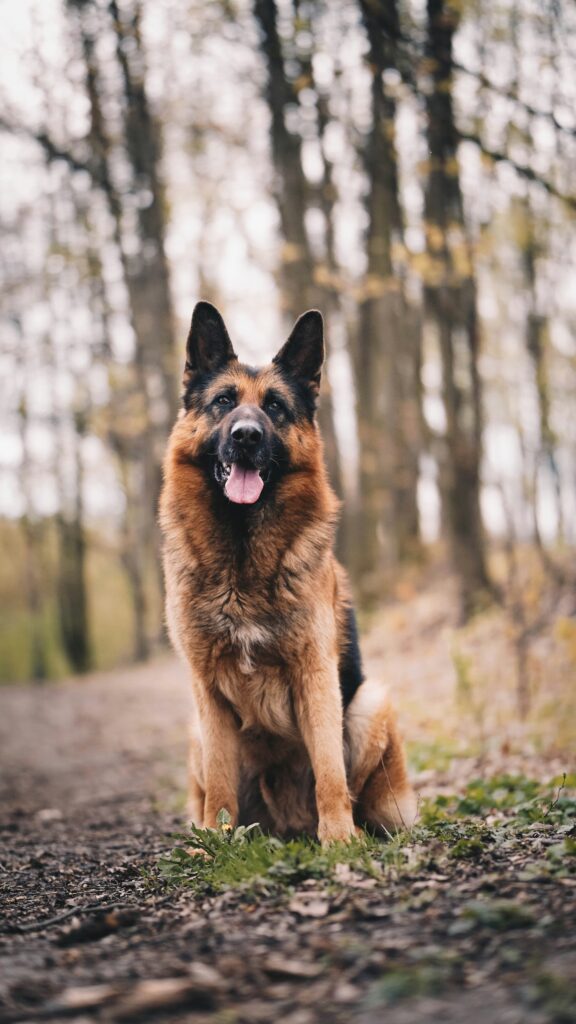
Photo by Phil Robson on Unsplash

When families reach out to dog trainers, they often start with the same request: “We need our dog to be more obedient.” They want their dog to sit on command, walk perfectly on leash, come when called, and stop doing all those annoying dog things—the jumping, the barking, the counter surfing, the midnight zoomies.

But here’s what I’ve come to understand through my work with families and their dogs, informed by the science of dog cognition and behavior: obedience and enrichment are fundamentally different approaches to living with dogs, and only one of them actually addresses what your dog needs.

Let me explain why understanding this difference might completely transform your relationship with your dog.

What Obedience Really Is (And What It Isn’t)

Obedience training focuses on teaching dogs to perform specific behaviors on cue—sit, stay, down, come, heel. It’s about compliance, control, and getting your dog to do what you want, when you want it. Traditional obedience asks dogs to suppress their natural behaviors and respond to human commands regardless of what they’re feeling or needing in that moment.

Don’t get me wrong—having a dog who understands basic cues can be helpful for safety and household harmony. Knowing “wait” at doorways or “leave it” when they spot something potentially dangerous on a walk serves a practical purpose.

But obedience training alone doesn’t ask the most important question: Why is your dog doing the behavior you’re trying to stop?

When we focus exclusively on obedience, we’re treating dogs like machines that need programming rather than sentient beings with complex emotional lives, genetic predispositions, environmental needs, and individual learning histories. We’re asking them to perform without considering what they’re trying to communicate through their behavior.

Understanding Enrichment: Meeting Needs, Not Demanding Compliance

Enrichment takes a completely different approach. Instead of asking “How do I make my dog stop doing that?”, enrichment asks “What does my dog need that they’re not getting?”

Enrichment is about providing opportunities for dogs to engage in species-appropriate behaviors that fulfill their genetic, environmental, emotional, and cognitive needs. It’s grounded in understanding the L.E.G.S.® framework—Learning, Environment, Genetics, and Self—which recognizes that behavior isn’t random or a training failure. It’s information about what’s working and what’s missing in a dog’s life.

When I work with families, enrichment means:

  • Giving a Scent Hound nose work opportunities instead of demanding they ignore every smell on a walk
  • Providing a Terrier with appropriate digging and shredding outlets instead of punishing their genetic drive to hunt small prey
  • Offering a Herding Dog movement-based games and jobs instead of expecting them to be calm and still all day
  • Understanding that a Livestock Guardian needs to patrol and observe rather than training them out of their vigilance
  • Recognizing that a Sight Hound might need to chase something (like a flirt pole) instead of punishing them for taking off after squirrels

Enrichment acknowledges that there are no problem behaviors, only unmet needs waiting to be understood.

The Science Behind Why Enrichment Works

Research in dog cognition, particularly the work of scientists like Brian Hare, shows us that dogs are sophisticated social learners who experience complex emotions and make decisions based on their environment, past experiences, and genetic predispositions. They’re not blank slates waiting for training—they’re individuals with histories, personalities, and needs.

When we understand behavior through the L.E.G.S.® framework, we see that:

Learning (L): Every dog has a unique learning history. A dog who’s been punished for barking hasn’t learned not to bark—they’ve learned that expressing their needs leads to conflict. Enrichment provides positive learning opportunities that teach dogs what to do, not just what not to do.

Environment (E): A dog’s physical and social environment profoundly impacts their behavior. A dog who’s understimulated, over-aroused, or living in environmental chaos isn’t being disobedient—they’re responding to their circumstances. Enrichment addresses environmental factors that create behavioral challenges.

Genetics (G): This is where breed-specific needs become crucial. A Border Collie’s need to herd isn’t a training problem—it’s genetic purpose seeking an outlet. A Beagle’s nose-to-ground focus isn’t disobedience—it’s what Scent Hounds were literally bred to do for centuries. When we provide breed-appropriate enrichment, we honor dogs’ genetic heritage instead of fighting against it.

Self (S): Each dog is an individual with their own personality, preferences, fears, and joys. What enriches one dog might stress another. True enrichment requires getting to know your specific dog—not following a one-size-fits-all training program.

What This Looks Like in Real Life

Let me give you a real example that illustrates the difference.

This is the kind of situation families often face: a young Labrador Retriever is ‘destructive’ and ‘won’t listen.’ The family has tried obedience training. Their dog knows ‘sit’ and ‘down,’ but continues to destroy shoes, dig in the backyard, and pull on leash during walks.

The obedience approach would focus on more training—stronger corrections for pulling, more consistent punishment for destructive behavior, perhaps a crate for longer periods when they can’t supervise.

The enrichment approach asks different questions:

  • How much retrieval opportunity does this Gun Dog get daily? (Genetics)
  • What does their daily routine look like? Are they getting enough physical and mental stimulation? (Environment)
  • What happens right before the destructive behavior? Is the dog bored, anxious, or understimulated? (Learning)
  • What is this specific dog’s personality and energy level? Do they prefer water retrieves? Food puzzles? Sniffing games? (Self)

When we shift to enrichment, we might discover this Lab needs:

  • Multiple daily opportunities to carry things (Labradors were bred to retrieve!)
  • Water play or swimming several times a week
  • Sniff walks where pulling is expected and encouraged
  • Food puzzles and scatter feeding instead of bowl meals
  • Appropriate chewing outlets like frozen Kongs or bully sticks
  • A digging pit in the backyard with buried treasures

Suddenly, the “disobedient” dog isn’t destroying shoes because they’re getting appropriate outlets for their need to mouth, carry, and work. They’re not pulling on walks because they’re getting dedicated sniff time where pulling is the whole point. They’re not digging up the garden because they have a designated digging zone.

The behavior changed not because the dog learned to be more obedient, but because their needs were finally being met.

Why Obedience Often Fails (And What Happens Instead)

Here’s the uncomfortable truth: obedience training often “works” temporarily by suppressing behavior through pressure, corrections, or punishment—not by addressing underlying needs.

A dog might stop barking when punished with a shock collar, but they haven’t stopped feeling anxious, bored, or alert to perceived threats. They’ve just learned that expressing those feelings leads to pain. The anxiety remains; the communication has been silenced.

A dog might stop pulling on leash after enough leash corrections, but they haven’t stopped needing to sniff or move at their own pace. They’ve just learned that following their nose leads to discomfort. The need remains; the outlet has been removed.

This is why behavior “problems” so often return or morph into new issues. We’ve addressed the symptom without treating the cause.

Enrichment, on the other hand, provides appropriate outlets for natural behaviors. It says “Yes, you can dig—but here in this designated spot” instead of “No, never dig anywhere.” It says “Yes, you can sniff obsessively on these decompression walks” instead of “No, heeling only.”

Enrichment Isn’t Just About Toys and Puzzles

When families hear “enrichment,” they often think it means buying more toys or fancy puzzle feeders. While those can be part of enrichment, the concept is much deeper.

True enrichment includes:

Sensory Enrichment: Opportunities to use all five senses—sniffing walks, listening to nature sounds, watching the world from a window perch, exploring different textures underfoot

Physical Enrichment: Movement that matches genetic purpose—retrieval games for Gun Dogs, chase games for Sight Hounds, digging opportunities for Terriers, free running for Natural breeds

Social Enrichment: Appropriate interaction with humans and other dogs based on each dog’s social needs and preferences

Cognitive Enrichment: Problem-solving opportunities like food puzzles, scent work, learning new tricks they actually enjoy

Environmental Enrichment: Variety in daily life—new walking routes, novel experiences, safe exploration opportunities

Rest and Decompression: Yes, enrichment includes adequate sleep and downtime! Many “disobedient” dogs are actually overtired and overstimulated.

The Role of Choice in Enrichment

Here’s something that makes enrichment fundamentally different from obedience: agency and choice.

Obedience training typically removes choice. The dog must sit when told, regardless of whether they want to or feel safe doing so in that moment. They must walk at the handler’s pace, focusing on the human rather than their environment.

Enrichment provides choice. On a sniff walk, your dog chooses where to smell and for how long. During scatter feeding, they choose which path to take finding food. With multiple enrichment options available, they choose which activity meets their needs right now.

Research shows that having control over their environment reduces stress in dogs and increases their ability to cope with challenges. When dogs have opportunities to make choices throughout their day, they’re more resilient, confident, and emotionally balanced.

This doesn’t mean chaos or no boundaries. It means structuring your dog’s life so they have appropriate outlets and agency within safe parameters.

Enrichment Changes the Relationship

When I talk with families about shifting from an obedience mindset to an enrichment mindset, something profound happens in the human-dog relationship.

Instead of seeing their dog as something to be controlled and corrected, families start seeing their dog as an individual to be understood and supported. Instead of frustration over “disobedience,” there’s curiosity about unmet needs. Instead of demanding compliance, there’s collaboration toward meeting everyone’s needs—human and canine.

Dogs aren’t barometers for family emotional health because they’re perfectly obedient. They’re barometers because they’re authentic—they show us when something’s off, when needs aren’t being met, when the household system needs adjustment.

When we meet our dogs’ enrichment needs, we’re not just changing their behavior—we’re honoring who they are.

Finding the Balance

Does this mean basic cues and boundaries don’t matter? Of course not. There’s a place for teaching dogs practical skills that keep them safe and make coexistence easier.

But those cues work better when taught and practiced within a framework of met needs. A well-enriched dog has better impulse control, more resilience, improved focus, and stronger emotional regulation. They’re more capable of learning because they’re not in a constant state of stress from unmet needs.

The question isn’t “obedience OR enrichment”—it’s understanding that enrichment must come first. When your dog’s genetic needs, environmental needs, emotional needs, and individual preferences are being addressed through thoughtful enrichment, any practical skills you want to teach become exponentially easier.

What This Means for Your Family

If you’re reading this and recognizing that you’ve been focusing on obedience while your dog’s enrichment needs have been neglected, I want you to know: this isn’t about guilt. It’s about new information opening new possibilities.

The beauty of the enrichment approach is that it’s individualized. There’s no one-size-fits-all program to follow, no perfect training protocol to execute. There’s just your specific dog, with their unique combination of Learning, Environment, Genetics, and Self, waiting for you to see their behavior as communication rather than defiance.

Start by getting curious:

  • What breed or breed mix is your dog, and what were those breeds originally bred to do?
  • What does a typical day look like for your dog? Where might needs be going unmet?
  • What does your dog do when given complete freedom to choose? (This tells you what they’re intrinsically motivated to do!)
  • What environments or activities seem to bring your dog joy and satisfaction versus stress or frustration?

Your dog isn’t broken and doesn’t need fixing through obedience. They need understanding, appropriate outlets, and a life that honors who they are.

Moving Forward: From Commands to Connection

The shift from obedience to enrichment isn’t just a different training method—it’s a different philosophy of living with dogs. It’s the difference between seeing dogs as subordinates who need discipline versus seeing them as family members who deserve to have their needs met with the same consideration we’d give any loved one.

As a Family Dog Mediator, my work isn’t about teaching dogs to be more obedient. It’s about helping families understand their dogs well enough to create environments where both species can thrive together. It’s about recognizing that behavioral challenges are almost always communication about unmet needs.

When we provide true enrichment—when we honor our dogs’ genetics, support their learning, optimize their environment, and celebrate their individual selves—we don’t need to demand obedience. We get cooperation, partnership, and a relationship built on mutual respect and understanding.

That’s not just a better way to live with dogs. It’s the only way that truly honors who they are.

Filed Under: Insights

Why Does Your Dog Burrow Under Pillows and Blankets? Understanding the Need Behind the Nest

October 15, 2025 by Jennyfer Tan Leave a Comment

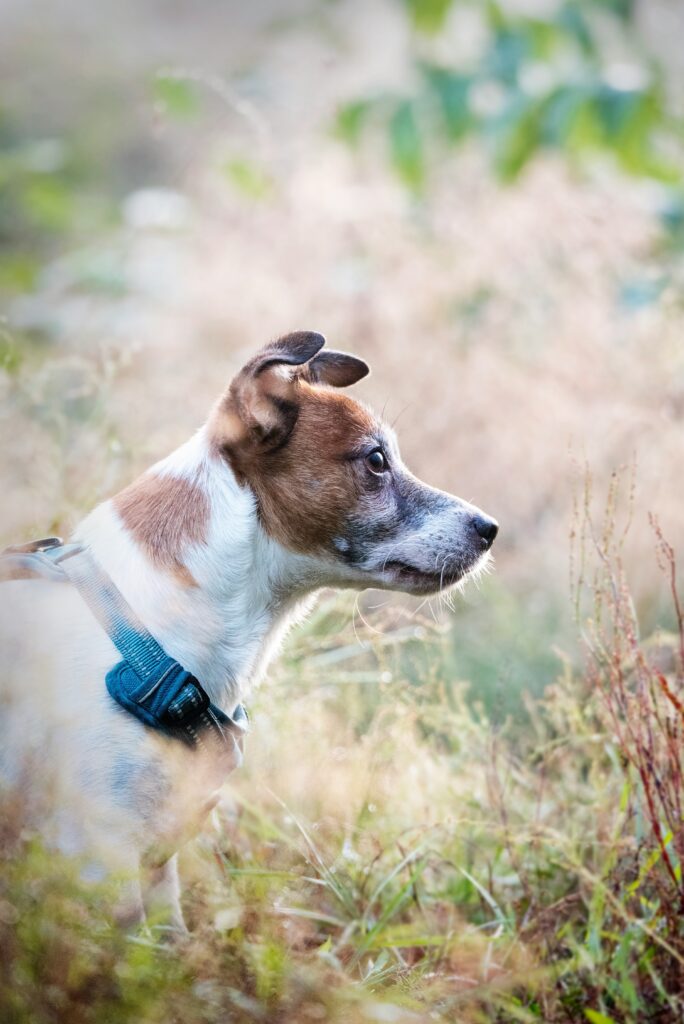
Photo by Ivan Babydov

You’re settling in for the evening, and suddenly your dog is doing that thing again—pawing at the couch cushions, circling obsessively, and burrowing themselves into a cocoon of blankets and pillows until only their nose (maybe) is visible. Or perhaps you’ve found them completely entombed under your bed pillows, looking utterly content in their fabric cave.

Is this normal? Should you worry? And more importantly—what is your dog trying to tell you?

As a Family Dog Mediator, I’m constantly reminding families that there are no problem behaviors, only unmet needs waiting to be understood. And burrowing? This is one of those behaviors that beautifully illustrates why we need to look at the whole dog—their genetics, their environment, what they’ve learned, and their individual self—rather than applying one-size-fits-all explanations.

The Ancestral Blueprint: Genetics at Work

Let’s start with the G in L.E.G.S.—Genetics. Your dog’s desire to burrow isn’t random; it’s likely written into their DNA.

Wild canids—wolves, foxes, coyotes—are denning animals. They seek out or create enclosed spaces for safety, warmth, and raising young. Dens protect them from predators, harsh weather, and provide a secure place to rest. Even though your dog has never had to dig a den in the wild, these ancestral instincts remain powerful drivers of behavior.

But here’s where it gets really interesting: not all dogs burrow equally, and breed matters enormously.

Think about terriers—dogs literally bred to go to ground, to pursue prey into burrows and tunnels. A Jack Russell Terrier burrowing under your duvet isn’t being quirky; they’re doing exactly what generations of selective breeding designed them to do. Dachshunds? Same story. These “badger dogs” were bred to tunnel into underground dens.

Then you have the Nordic breeds—your Huskies, Malamutes, and Samoyeds—who were bred to sleep in the snow. They naturally dig shallow nests to create windbreaks and insulation. Your Husky rearranging your couch cushions into a nest? That’s genetic memory at work.

Even breeds not specifically bred for earth work often show burrowing behaviors. Many small companion breeds (Chihuahuas, Italian Greyhounds, Chinese Cresteds) seek warmth and security under covers, likely because their small size and sometimes lower cold tolerance makes enclosed spaces feel safer and more comfortable.

Environment: Reading the Room (and the Temperature)

The E in L.E.G.S. reminds us that environment shapes behavior constantly. And burrowing behavior is deeply influenced by environmental factors.

Temperature regulation is huge here. Dogs don’t thermoregulate the way we do. A 68-degree house that feels perfectly comfortable to you might feel chilly to a 12-pound Italian Greyhound with minimal body fat and short coat. Burrowing under blankets creates a microclimate—a warm, insulated space that’s just right.

Conversely, some dogs burrow to stay cool, creating a barrier between themselves and direct heat sources, or seeking the cooler layer between cushions and couch.

Sensory environment matters too. Our modern homes are full of stimulation—doorbells, delivery trucks, neighbors, televisions, the hum of appliances. For some dogs, especially those who are sensitive or anxious, burrowing creates a sensory buffer. It’s not unlike how we might put on noise-canceling headphones or retreat to a quiet room when we’re overstimulated.

Consider also the emotional environment of your home. Dogs are incredible social learners and emotional barometers. Research on social referencing in dogs shows us that dogs constantly look to us for cues about how to feel about their environment. If there’s tension, stress, or unpredictability in the household, your dog might burrow more as a coping mechanism—creating a safe, predictable space they can control.

Learning: What Experience Has Taught Them

The L in L.E.G.S. is all about learning, and dogs are learning from their experiences every moment.

Maybe the first time your dog burrowed under a blanket, they discovered it was wonderfully cozy. That positive experience created an association: blanket cave = good feelings. Classical conditioning at its finest. Now, every time they seek comfort, warmth, or security, they remember that sensation and seek it out again.

Or perhaps your dog learned that burrowing gets them something they value. Do you think it’s adorable when they burrow? Do you laugh, take photos, give them attention? Congratulations—you’ve positively reinforced the behavior. This isn’t a bad thing! But it’s important to recognize that what we pay attention to, we get more of.

Some dogs learn that burrowing is a pre-sleep ritual, part of their wind-down routine. Just as we might read before bed or listen to white noise, your dog has learned that making a nest signals rest time.

And here’s something many people don’t consider: dogs who experienced stress, inadequate shelter, or cold temperatures in their past (especially rescues or dogs from uncertain backgrounds) may have learned that creating their own warm, enclosed space is essential for survival. That learning doesn’t just disappear because they’re now in a safe home—it can take time and consistent positive experiences to update those associations.

Self: Your Individual Dog’s Unique Needs

Finally, we get to the S in L.E.G.S.—Self. This is about your specific dog, their individual temperament, their current emotional state, their age, health, and preferences.

Age matters. Puppies often burrow because they’re used to being piled with littermates, and they’re seeking that warmth and companionship. Senior dogs might burrow more because they feel achy, cold more easily, or need extra security as their senses decline.

Emotional state is crucial. A dog experiencing anxiety, fear, or stress might burrow as a self-soothing behavior. Pay attention to when the burrowing increases. Is it during thunderstorms? When visitors come over? When you’re away? This behavior might be telling you something important about your dog’s emotional needs.

Health considerations can’t be ignored either. Dogs in pain sometimes seek out soft, supportive surfaces and enclosed spaces. A dog who suddenly starts burrowing more might be dealing with joint pain, a fever, or gastrointestinal discomfort. If the behavior changes significantly or seems excessive, a vet check is always warranted.

Individual personality plays a role too. Some dogs are just more comfort-seeking, more nest-oriented, more “den dogs” than others—even within the same breed. Just as some humans are natural homebodies who love being cocooned in blankets while others prefer open spaces, dogs have individual preferences.

What Your Dog’s Burrowing Might Be Telling You

So when you see your dog burrowing, what should you be thinking about?

“Am I meeting my dog’s breed-specific needs?” If you have a terrier who burrows constantly, are they getting enough appropriate outlets for those earth-dog instincts? Snuffle mats, dig boxes, and tunnel toys might give them a healthier way to express those genetic drives.

“Is my home’s environment comfortable for my specific dog?” That 70-degree thermostat setting might be perfect for you but uncomfortable for your thin-coated, low-body-fat companion. A heating pad, dog bed with raised sides, or additional blanket access might make a huge difference.

“What is my dog’s emotional state?” If burrowing has increased, what else has changed? Are they getting enough mental stimulation? Physical exercise? Decompression time? Are there new stressors in the home? Dogs don’t burrow to spite us or because they’re “weird”—they’re communicating something about their needs.

“Is this behavior part of their natural, healthy repertoire or a sign something needs attention?” A dog who occasionally burrows and seems content is probably just doing dog things. A dog who suddenly starts burrowing obsessively, seems unable to settle, or shows other changes in behavior needs our attention—and possibly professional help.

Supporting Your Burrowing Dog

Rather than trying to stop burrowing (unless it’s truly problematic), consider supporting it:

  • Provide appropriate outlets. Dog beds with built-in covers, blankets they’re allowed to nest with, or even a designated “burrow spot” on the couch.
  • Respect their need for a den space. If your dog creates a blanket cave, let them have it. This might be how they decompress and feel safe.
  • Monitor for changes. Sudden increases or decreases in burrowing behavior warrant attention.
  • Consider the whole picture. Use the L.E.G.S. framework to understand what your dog might need. Is it warmth? Security? An outlet for genetic drives? Mental enrichment? Physical exercise?

The Bottom Line

Your dog’s burrowing behavior isn’t random, isn’t “just being weird,” and definitely isn’t something to punish or discourage without understanding the need behind it. Like all behavior, it’s communication—your dog telling you something about who they are, what they need, and how they’re experiencing their environment.

When we stop seeing behaviors as problems to fix and start seeing them as needs to understand, we become better advocates for our dogs. We move from asking “how do I make them stop?” to asking “what are they trying to tell me?”—and that shift changes everything.

Because at the end of the day, your burrowing dog isn’t being difficult. They’re being a dog—wonderfully, perfectly, individually themselves. And that deserves our understanding, not our judgment.


Does your dog burrow? What have you learned about what they’re communicating through this behavior? Understanding the needs behind the nest might be the key to meeting your dog where they are.

Filed Under: Genetics

What “Walking Your Dog” Really Means: A Breed Group Guide

October 11, 2025 by Jennyfer Tan Leave a Comment

We’ve all heard the advice: “A tired dog is a good dog.” But here’s what most people miss—the way your dog gets tired depends entirely on what they were bred to do.

When we talk about “walking” our dogs, we often think it’s all about the physical exercise—the distance covered, the steps taken. But for many dogs, that’s missing the point entirely. Understanding your dog’s breed group helps you meet their needs in ways that actually matter to them.

Let’s break down what “going for a walk” truly means for each of the 10 breed groups.

1. Scent Hounds: It’s All About the Nose

For your Beagle, Bloodhound, or Coonhound, walking isn’t really about walking at all—it’s about smelling. These dogs were bred to follow scent trails for miles, often with their noses glued to the ground.

What they actually need: Long, leisurely sniff walks where they can fully investigate scents. Think 20 minutes of dedicated sniffing over an hour of brisk walking. Let them work those incredible noses—it’s mentally exhausting in the best way.

The payoff: A scent hound who’s been allowed to properly use their nose will come home cognitively spent and satisfied.

2. Sight Hounds: The Need for Speed

Greyhounds, Whippets, and Salukis were built to spot movement from a distance and chase it down in explosive bursts of speed. A slow neighborhood stroll? That’s like asking a sprinter to only ever walk laps.

What they actually need: Safe opportunities to run—really run. This might mean a securely fenced area, a long line in an open space, or lure coursing activities. Yes, they also need gentle leash walks, but those don’t scratch the itch to stretch their legs at full speed.

The payoff: Even just 10-15 minutes of hard running can satisfy their genetic need in ways hours of slow walking cannot.

3. Livestock Guardians: Patrol and Surveillance

Your Great Pyrenees, Anatolian Shepherd, or Maremma wasn’t bred to hike with you—they were bred to patrol a perimeter and make independent decisions about potential threats.

What they actually need: Walks that allow them to move at their own pace, pause to survey their environment, and check things out. They need to feel like they’re monitoring their territory, not being rushed through it. These dogs often prefer to walk with you rather than be directed by you.

The payoff: Slower, more deliberate walks where they can stop, look, and assess. They’re working security detail, not training for a marathon.

4. Herding Dogs: Motion and Purpose

Border Collies, Australian Shepherds, and Belgian Malinois were bred to work all day moving livestock with precision and focus. A simple walk around the block? That’s not even a warm-up for these dogs.

What they actually need: Movement with a job attached. This might mean structured training during walks, practicing tricks, playing fetch with direction changes, or even walking with a purpose like carrying a backpack. They crave engaged movement—not just distance.

The payoff: Mental engagement plus physical activity. A herding dog who’s been asked to think while moving will be genuinely satisfied.

5. Northern/Spitz Breeds: The Long Haul

Huskies, Malamutes, and Samoyeds were bred to pull sleds over long distances in harsh conditions. They have endurance for days and often a strong desire to just keep going.

What they actually need: Longer adventures where they can move steadily—hiking, bikejoring, or pulling activities. These dogs often need more distance and duration than other breeds, and they typically love cooler weather for it.

The payoff: True aerobic exercise that taps into their cardiovascular stamina. A 20-minute walk barely touches their capacity.

6. Terriers: Hunt and Dig

Jack Russells, Cairn Terriers, and Airedales were bred to hunt vermin—to dig, chase, grab, and shake. They’re tenacious, determined, and always “on.”

What they actually need: Walks that incorporate opportunities to dig (in appropriate spots), investigate holes and crevices, and play tug or chase games. These dogs benefit from activities that let them “hunt” and use their grab-and-shake behaviors appropriately.

The payoff: A terrier who’s gotten to express these natural behaviors will be much more settled than one who’s just walked on pavement.

7. Gun Dogs/Sporting Dogs: Retrieve and Range

Labradors, Golden Retrievers, Spaniels, and Pointers were bred to work with hunters—finding, flushing, and retrieving game. They love having a job and using their mouths.

What they actually need: Walks that incorporate retrieval games, swimming (when possible), and ranging behaviors. Let them carry something on walks, practice retrieves, or search for hidden objects. They’re happiest when they’re working with you.

The payoff: Physical exercise combined with the satisfaction of doing what their bodies were designed to do—carry things, swim, and hunt cooperatively.

8. World Dogs: Generalist Survivors

Village dogs, mixed breeds, and dogs without specific breed functions fall into this category. These are the ultimate generalists—adaptable dogs who weren’t bred for a single purpose but rather to survive and thrive in diverse environments.

What they actually need: World Dogs are often the most flexible of all groups. They typically benefit from variety—different routes, different types of activities, opportunities to problem-solve. Many are naturally balanced between physical and mental stimulation needs, though individual variation is high.

The payoff: Adaptability is their strength. A walk that offers novelty, choice, and opportunities to engage naturally with their environment often satisfies them best. Think enrichment through exploration.

9. Bull & Terriers: Power and Intensity

American Pit Bull Terriers, Staffordshire Bull Terriers, and American Bulldogs were bred for strength, determination, and intense focus. They bring enthusiasm and power to everything they do.

What they actually need: Structured walks with clear boundaries, plus outlets for their strength like pulling activities (drag weights, spring poles used appropriately) or power play. They benefit from activities that let them use their impressive physical strength purposefully.

The payoff: These dogs need both physical outlets and mental structure. They thrive when their power is channeled into appropriate activities.

10. Companions/Toy Dogs: Social Connection

Cavaliers, Pugs, Maltese, and Havanese were bred primarily to be with people. While they still need exercise, their primary need is often social engagement and proximity to their humans.

What they actually need: Walks are as much about being with you as they are about exercise. These dogs often enjoy social walks where they can meet people, shorter adventures that match their size, and activities focused on connection.

The payoff: A walk where they feel connected to you meets their deepest genetic need—companionship.

The Bottom Line

When we say “walk your dog,” we’re often oversimplifying what our dogs actually need. Understanding your dog’s genetic blueprint helps you meet their real needs, not just tire them out.

  • Is your dog physically exhausted but still anxious? Maybe they need different mental stimulation.
  • Does your dog seem unfulfilled despite long walks? Perhaps you’re missing what they were actually bred to do.
  • Is your dog pulling you down the street while ignoring everything you say? They might need a completely different kind of outing.

The most important walk isn’t the longest one or the fastest one—it’s the one that honors who your dog actually is. When you align your walks with your dog’s genetic needs, you’ll find both of you coming home more satisfied.


Understanding your dog through the lens of genetics is just one part of the L.E.G.S.® framework (Learning, Environment, Genetics, Self). When we honor all four components, we create truly harmonious relationships with our dogs.

Filed Under: Genetics

  • « Go to Previous Page
  • Page 1
  • Page 2
  • Page 3
  • Page 4
  • Page 5
  • Go to Next Page »

Blog Categories

  • Genetics
  • Insights
  • Learning
  • Urban Living

Work With Me

Single Dog Assessments


Multi-Dog Assessments

Products

  • The Canine Enrichment Vault - 70 Interactive Activities The Canine Enrichment Vault - 70 Interactive Activities $17.00

ABOUT

Jennyfer Tan is a Certified Family Dog Mediator and Professional Dog Trainer based in Vancouver, BC, serving families worldwide. She provides comprehensive behavioral and wellness assessments for all dogs—from everyday companions to those with complex needs—using the science-based L.E.G.S.® model + Total Welfare and Four Pillars Approach. Understanding before strategies, always.

Certifications

Follow Us

  • Facebook
  • Instagram
  • Pinterest

Copyright © R+R Canine Consulting2026 · Website by Fancy Girl Design Studio