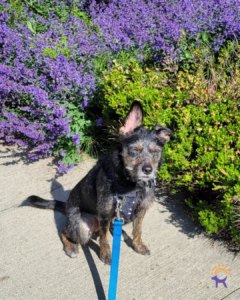
When we first got Rosco, a neighbor told me he was "trying to be alpha" when he pulled on leash. He insisted I needed to "show him who's boss" with leash corrections, show my dominance over him.
So I tried it. And Rosco's welfare suffered.
His stress levels increased visibly - constant panting, whale eye, tucked tail. His trust in me decreased - he'd hesitate before coming to me, flinching when I reached for his collar. And most heartbreakingly, his freedom to explore the world through his nose - the way dogs are meant to experience walks - was completely shut down.
He wasn't learning. He was shutting down.
That's when I started questioning everything I'd been told about dominance, respect, and what dogs "should" do on walks.
The Myth That Won't Die
The idea that leash pulling equals dominance is one of the most persistent myths in dog training. According to this outdated theory, when your dog pulls on leash, they're trying to:
- Establish themselves as "alpha"
- Take control of the walk
- Disrespect or challenge you
- Prove they're in charge
This myth is rooted in dominance theory - a framework based on flawed wolf studies from the 1940s that has been thoroughly debunked by modern canine science. Yet it persists in popular culture, perpetuated by certain TV trainers and passed down through generations of dog owners.
I understand why people believe it. I believed it myself for a while. It's really tempting to anthropomorphize - to assume our dogs think like humans with human motivations about power and control.
Plus, pulling feels frustrating. It can seem like your dog is "ignoring" or "disrespecting" you, especially when you're calling their name and they're laser-focused on whatever they're pulling toward.
The dominance explanation offers a simple narrative: your dog is being bad, you need to be the boss, problem solved.
But this narrative ignores everything we know about how dogs actually think, learn, and experience the world.
Dogs pull on leash because they're being dogs. Let me break down what's really going on from a welfare perspective.
The Five Domains of Dog Welfare
Modern animal welfare science uses the Five Domains model to assess wellbeing. When we understand leash pulling through this lens, everything changes:
Physical Health:
Force-based corrections cause real physical harm - neck injuries, throat damage, and spinal problems from leash pops and prong collars. These aren't abstract concerns; they're documented veterinary issues. Your dog's physical health is the foundation of their welfare.
Environmental Needs:
Dogs need freedom to explore and gather information about their world. Their primary sense is smell - their noses are 10,000 to 100,000 times more sensitive than ours. When your dog pulls toward a smell, they're not disrespecting you. They're trying to read the newspaper of the neighborhood - who was here, what happened, what's interesting.
Behavioral Opportunities:
The ability to express natural behaviors like scenting, investigating, and exploring is fundamental to dog welfare. Suppressing these behaviors through punishment doesn't make them go away - it just frustrates your dog and compromises their wellbeing.
Mental Experiences:
Enrichment comes through sensory exploration. A walk where your dog can sniff and investigate is mentally stimulating and satisfying. A walk where they're constantly corrected for expressing natural curiosity is mentally impoverishing.
Emotional State:
Training built on positive experiences creates security, trust, and joy. Training built on fear and pain creates anxiety, stress, and damaged relationships.
If we analyze this using the L.E.G.S. framework, dogs pull because:
Learning: They've been accidentally reinforced for pulling - when they pull, they move forward and get closer to interesting things. We taught them this, even though we didn't mean to.
Environment: The world outside is fascinating, full of smells and sights and sounds that are incredibly stimulating to dogs. Of course they're excited!
Genetics: Many breeds were specifically selected for scent-driven work. Bloodhounds, Beagles, Terriers - these dogs NEED to use their noses. Fighting their genetics violates their welfare.
Self: Sometimes pulling is about fear - they're trying to create distance from something scary (this was Rosco's issue). Sometimes it's pure excitement - they want to GET TO interesting smells (this is Rei's issue). The same behavior, completely different motivations.
When we frame pulling as "dominance" and use corrections to stop it, we violate dog welfare across all five domains:
- Physical harm from aversive tools
- Environmental deprivation (can't explore)
- Suppressed natural behaviors
- Mental stress and confusion
- Emotional fear and damaged trust
And here's the kicker: it doesn't even work long-term. Suppression through fear isn't the same as teaching. Your dog might stop pulling because they're scared of the correction, but they haven't learned loose leash walking as a skill. They've just learned that walks are unpredictable and potentially painful.
Here's how I transformed walks with Rosco and Rei while protecting their welfare:
1. Respect Their Need to Explore
I stopped seeing pulling as a problem to "correct" and started seeing it as communication about their needs. Now we do:
- Sniff walks: Where they lead and investigation is the entire point. These walks are FOR them.
- Decompression walks: In nature where they can be dogs - sniffing, exploring, processing information at their own pace.
- Freedom on long lines: 15-30 foot long lines that give them space to explore while staying safe.
2. Teach Loose Leash Walking as a Separate Skill
Loose leash walking is a skill that needs to be taught, just like any other behavior:
Start in low-distraction environments (your yard, quiet street)
- Reward heavily when the leash is loose (every few steps at first!)
- Use high-value treats that make it worth their while to check in with you
- Build duration gradually - don't expect perfection on busy streets right away
- Practice in increasingly challenging environments
3. Address the Underlying Need
Ask yourself: WHY is my dog pulling?
- Fear-based pulling: They need more distance from triggers, systematic desensitization, and confidence building
- Excitement pulling: They need mental enrichment, impulse control training, and appropriate outlets for energy
- Breed-specific pulling: They need activities that honor their genetics (nosework for scent hounds, fetch for retrievers, etc.)
When I stopped seeing Rosco's pulling as defiance and started seeing it as communication about his fear, everything changed. He was trying to create distance from triggers. His welfare required that I:
- Give him that distance (cross the street, turn around, create space)
- Work on his confidence at sub-threshold levels
- Never punish him for expressing fear
- Protect his emotional security
His welfare improved dramatically:
- Physically: No more pain or discomfort from corrections
- Environmentally: They can explore and gather information
- Behaviorally: They express natural dog behaviors freely
- Mentally: Walks are enriching, not stressful
- Emotionally: They trust me, feel secure, and genuinely enjoy walks
The Freedom to Be a Dog
Here's what I want you to take away from this: your dog has the right to be a dog. They have the right to experience the world through their primary sense. They have the right to explore, investigate, and gather information about their environment.
Loose leash walking is a valuable skill worth teaching. But it should be taught through positive reinforcement that protects welfare, not through dominance theory that violates it.
Your dog isn't trying to dominate you. They're trying to be a dog in a human world. Our job is to teach them the skills they need while honoring who they are.
If you've been told your dog is "dominant" and you've used corrections to stop pulling, please be gentle with yourself. You were doing your best with the information you had. Now you know better.
You can:
- Ditch the aversive tools
- Give your dog the freedom to explore
- Build the skill while protecting their welfare
Your dog deserves training that honors their welfare. They deserve to experience walks with joy, not fear. They deserve the freedom to be a dog.
And you deserve the relationship that comes from training built on trust, not dominance.
_____________________________________________________________
If you've been struggling with leash pulling and wondering what's really going on, book our behavioral and wellness assessment. This isn't about "fixing" your dog—it's about understanding what they need first before doing any training or thinking about strategies.
The assessment will help you identify:
- Whether your dog's needs are being met (Physical, Environmental, Behavioral, Mental, Emotional)
- Which welfare areas need the most attention
- Specific next steps tailored to your dog's situation